
Your Digital Transformation Pilot Worked. So Why Can’t You Scale It?
One of the more frustrating parts of digital transformation is that a successful pilot can create almost as many questions as it answers.
A team identifies a useful application, proves that the technology works, and gets enough of a result to justify further investment. Maybe it is a predictive maintenance model that catches an equipment issue early, a new dashboard that gives operations better visibility into production, a digital workflow that replaces a manual process, or an AI application that produces something genuinely useful.
At that point, the next question is usually obvious: how do we roll this out everywhere else?
That is often where things get difficult.
The pilot may have worked perfectly well on one line or in one facility, but scaling it exposes all of the inconsistencies that were manageable in a controlled environment. The engineers who built the pilot knew the equipment, understood the data, worked around naming differences, cleaned up information when they needed to, and could troubleshoot problems as they came up. None of that necessarily means the solution is ready to be repeated across an entire plant network.
That gap between proving something can work and building something that can work repeatedly is where a lot of manufacturers get stuck.
A pilot can hide a lot of complexity
Imagine a predictive maintenance pilot running successfully on one production line. The team has access to the right machine data, equipment states are well defined, downtime is categorized consistently, and the people involved understand exactly how that line behaves.
Then the organization decides to expand the same solution to 30 lines across five facilities.
Suddenly, one plant uses different tag names. Another has older PLCs. Asset hierarchies do not match. Downtime codes mean different things from site to site. One facility has a mature MES integration while another still relies heavily on manual entry. Important equipment data may live in different historians, databases, or local systems depending on when each site was modernized and who did the work.
At that point, the predictive model itself may be the least complicated part of the project.
The real work becomes figuring out how to create enough consistency around the technology so
that it can operate reliably in environments that were never designed to be identical.
Manufacturers are running into this now
This is becoming more visible as manufacturers move from experimenting with AI, analytics, smart manufacturing, and connected operations toward trying to deploy those technologies at a meaningful scale.
The Manufacturing Leadership Council reported this year that more than 90 percent of surveyed manufacturers expect to maintain or increase their investment in smart factory and production technologies. At the same time, manufacturers continue to report significant challenges around data readiness, integration, legacy systems, and the ability to move successful use cases beyond isolated implementations.
That distinction matters because the barrier to scale is not always the technology itself.
A manufacturer may already have the right MES platform, historian, SCADA system, cloud environment, analytics tools, and automation infrastructure. The problem is that those systems were often implemented at different times, by different teams, for different purposes. They may all work individually while still creating a difficult environment for anything that depends on consistent data and repeatable integrations.
A pilot can work around those differences. A scalable solution usually cannot.
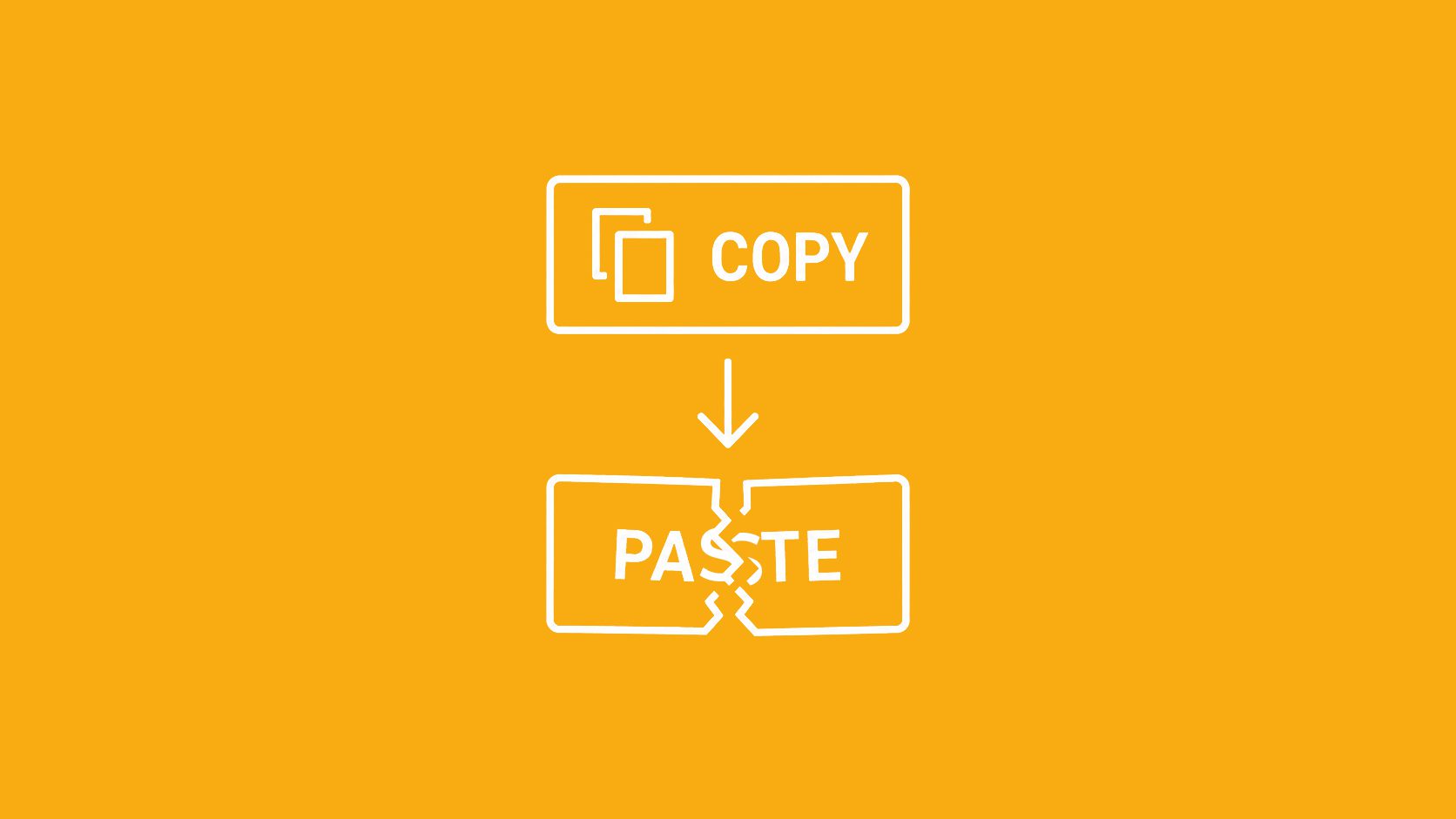
Copying the pilot is not the same as scaling it
When a pilot succeeds, the natural instinct is to reproduce it somewhere else. Take what worked on Line 3, move it to Line 4, then repeat the process at another facility.
That approach can work for a while, but it becomes expensive quickly if each deployment requires engineers to reinterpret tags, rebuild integrations, reconcile data structures, rewrite logic, and account for a new set of local exceptions.
At that point, the organization is not really scaling. It is repeating a custom engineering project.
The more useful question is what needs to become consistent so the same problems do not have to be solved every time.
That could mean standardizing equipment models, tag structures, naming conventions, integration patterns, security requirements, data definitions, or the way production events are represented across systems. It may also require making some harder architectural decisions about where information should live, which system should own it, and how it should move between the plant floor and the enterprise.
None of that work is particularly flashy, but it is usually what determines whether a successful pilot becomes a real capability or remains a one-off project.
The work between the pilot and the rollout
There is a tendency to think of digital transformation in terms of visible technology: the dashboard, the digital twin, the AI model, the new application, or the new platform.
In practice, much of the transformation happens in the less visible work between those things.
It happens when a manufacturer creates enough consistency in its data and system architecture that a solution can move from one facility to another without being redesigned from scratch. It happens when integrations are treated as part of a larger architecture rather than a collection of point-to-point connections. It happens when teams agree on what production data means, where it comes from, and how it should be used by downstream systems.
That is also why a pilot that does not scale easily can still be valuable. Sometimes it reveals that the organization has an architecture problem, a data-standardization problem, or an integration problem that was already there but had not been obvious until a new application depended on it.
If an AI use case requires engineers to manually reconcile data between ERP, MES, and SCADA at every site, the immediate problem may not be AI. If the same analytics application behaves differently at each plant because equipment and production data are structured differently, the issue may not be the analytics platform.
The pilot is telling you something about the environment around it.
From a working pilot to a repeatable capability
The path from pilot to scale usually requires more than copying what worked the first time. There needs to be enough architecture, standardization, and integration underneath the solution that the next deployment becomes easier rather than just different.
That is a large part of what digital transformation work should accomplish.
At DASH Engineering, we help manufacturers look beyond the individual pilot and understand what has to be true for that solution to work across the rest of the operation. That can mean evaluating the systems already in place, identifying gaps between OT and IT, establishing standards, improving integrations, or building a roadmap that allows digital initiatives to expand without creating another layer of technical debt.
A pilot that works on one line is useful because it proves the idea.
The real value comes when the organization can deploy it again without needing the original engineering team to rebuild the environment around it every time.
Sources:
Express Computer, “Why India’s ‘Factory of the Future’ Will Be Built on Data, Not Algorithms” (August 10, 2026).https://www.expresscomputer.in/news/why-indias-factory-of-the-future-will-be-built-on-data-not-algorithms/137588/
Manufacturing Leadership Council, “Survey: Smart Factories Enter the Execution Era” (January 31, 2026). https://manufacturingleadershipcouncil.com/survey-smart-factories-enter-the-execution-era/
Redwood Software, “Manufacturing AI and Automation Outlook 2026” (January 2026). https://www.redwood.com/press-releases/manufacturing-ai-and-automation-outlook-2026-98-of-manufacturers-exploring-ai-but-only-20-fully-prepared/


